<?xml version="1.0" encoding="utf-8"?><feed xmlns="http://www.w3.org/2005/Atom" ><generator uri="https://jekyllrb.com/" version="3.10.0">Jekyll</generator><link href="https://www.vcent.in/feed/writing.xml" rel="self" type="application/atom+xml" /><link href="https://www.vcent.in/" rel="alternate" type="text/html" /><updated>2026-10-18T02:21:57+00:00</updated><id>https://www.vcent.in/feed/writing.xml</id><title type="html">Vince J | Writing</title><subtitle>Personal site of Vince J — principal product manager writing about product management, reviewing heavy music, and sharing photography.</subtitle><author><name>Vince J</name></author><entry><title type="html">What the Fleet!</title><link href="https://www.vcent.in/writing/2020/11/21/what-the-fleet/" rel="alternate" type="text/html" title="What the Fleet!" /><published>2020-11-22T16:07:48+00:00</published><updated>2020-11-22T16:07:48+00:00</updated><id>https://www.vcent.in/writing/2020/11/21/what-the-fleet</id><content type="html" xml:base="https://www.vcent.in/writing/2020/11/21/what-the-fleet/"><![CDATA[<div class="sqs-html-content" data-sqsp-text-block-content>
  <p class="" style="white-space:pre-wrap;">Last week, Twitter globally launched Fleets for all devices. If you aren’t an avid twittterer, Fleets is an imitation of Snapchat’s and Instagram’s Stories feature. Ever since Snapchat developed this innovative way of displaying <em>disappearing content</em>, almost all social media apps have adopted this. From Instagram to Facebook to LinkedIn to Youtube. Since Twitter started testing out this feature earlier this year, there has been a tremendous vocal uproar about its introduction. Many valid, some not so. In this post, I hope to dissect Twitter’s foray into this space and also respond to some of Fleets’ criticism. </p><p class="" style="white-space:pre-wrap;">An <a href="https://twitter.com/Twitter/status/1328684389388185600">official tweet</a> from Twittter reads: </p>
</div>

<blockquote class="twitter-tweet"><p lang="en" dir="ltr">That thing you didn’t Tweet but wanted to but didn’t but got so close but then were like nah. <br><br>We have a place for that now—Fleets! <br><br>Rolling out to everyone starting today. <a href="https://t.co/auQAHXZMfH">pic.twitter.com/auQAHXZMfH</a></p>— Twitter (@Twitter) <a href="https://twitter.com/Twitter/status/1328684389388185600?ref_src=twsrc%5Etfw">November 17, 2020</a></blockquote>
<script async="" src="https://platform.twitter.com/widgets.js" charset="utf-8"></script>

<div class="sqs-html-content" data-sqsp-text-block-content>
  <p class="" style="white-space:pre-wrap;">Since its introduction, there has been wide-spread discontent about Fleets. Have a look at the hashtag <a href="https://twitter.com/search?q=%23FleetsFeedback&amp;src=typeahead_click">#FleetsFeedback</a> and you’ll see what I mean. </p><p class="" style="white-space:pre-wrap;">And then there’s this from someone who is reputed in the domain of business and strategy. </p>
</div>

<blockquote class="twitter-tweet"><p lang="en" dir="ltr">Oct 2013: Snapchat launches Stories<br>Aug 2016: Instagram copies it<br>Feb 2017: WhatsApp copies it<br>Mar 2017: Messenger copies it<br>Nov 2018: YouTube copies it<br>Sep 2020: LinkedIn copies it<br>Nov 2020: Twitter copies it<br><br>Wild how closely this matches each company's reputation for shipping.</p>— Alec Stapp (@AlecStapp) <a href="https://twitter.com/AlecStapp/status/1328759059131080706?ref_src=twsrc%5Etfw">November 17, 2020</a></blockquote>
<script async="" src="https://platform.twitter.com/widgets.js" charset="utf-8"></script>

<div class="sqs-html-content" data-sqsp-text-block-content>
  <p class="" style="white-space:pre-wrap;"><br>Despite the number of retweets and likes, I find this tweet by Alec somewhat disappointing. It’s easy to make fun of Twitter based on this trend but this observation is superficial. Simply put, this is not how product management works! The <em>who’s who</em> in Twitter would’ve clearly tracked the evolution of Stories and its applicability to Twitter. Twitter may have criticisms over its “shipping” velocity but it by no way considers the product’s or business’s priorities. Every year is different. 2020 seems to be about Fleets.  </p><p class="" style="white-space:pre-wrap;">While I won’t proclaim Fleets to be the best thing since nutella on sliced bread, let’s analyze this a bit further. </p><h2 style="white-space:pre-wrap;">What’s Fleets’ value proposition? </h2><p class="" style="white-space:pre-wrap;">Twitter is clearly trying to position Fleets, just the way <em>Stories</em> is positioned. Of late, Twitter has become a news outlet of sorts. For better or worse, it’s become a ground for political commentary. This shift from more “serious” engagement to more personal and casual conversations is something that I guess Twitter is hoping it’ll offer to its 330 million users. The fleeting nature of Stories make it more attractive for users to share personal feelings and thoughts. <br><br>According to an article on Verge: </p><blockquote><p class="" style="white-space:pre-wrap;">Twitter hopes the new feature will help reduce the pressure around tweeting by letting users express more casual thoughts and feelings while also concerning themselves less with saying something profound or racking up likes and retweets.</p></blockquote><p class="" style="white-space:pre-wrap;">While I understand the value proposition of Fleets, my gut feeling says that this looks good only on paper. The questions that immediately pop up are: </p><ol data-rte-list="default"><li><p class="" style="white-space:pre-wrap;">Where do the current Twitter base share personal/casual thoughts and posts? </p></li><li><p class="" style="white-space:pre-wrap;">Do Twitter users also use other social media apps? What’s the overlap? </p></li><li><p class="" style="white-space:pre-wrap;">If Twitter users are already habituated (and have an audience) for their personal/casual thoughts on Instagram/Snapchat Stories, why would they switch over to Twitter? </p></li><li><p class="" style="white-space:pre-wrap;">Perhaps, Twitter can learn from how Instagram effectively ripped off Snapchat’s stories and grew engagement by X%. What are those lessons? Are they replicable? </p></li></ol><p class="" style="white-space:pre-wrap;">Ultimately, products do <em>jobs</em> for us. Twitter needs to understand what it does for its users. If you ask me, I personally don’t feel Fleets offers anything novel to Twitter users in its current form. </p><h2 style="white-space:pre-wrap;">What’s the business impact?</h2><p class="" style="white-space:pre-wrap;">Let’s talk business now. Fleets is another format for displaying Twitter content. Currently, you can write a plain text, send a gif, create a poll…now you can create content in the form of a Fleet. If you disregard the (questionable?) value proposition, Fleets actually opens up several avenues on how key business metrics can be impacted! </p><p class="" style="white-space:pre-wrap;"><strong>Ad revenue </strong><br>With content in Fleets, there will be opportunities for targeted ad content. I’m being captain obvious here. According to their <a href="https://s22.q4cdn.com/826641620/files/doc_financials/2020/q3/Q3-2020-Selected-Financials-and-Metrics.pdf">Q3 2020 report</a>, 86% of Twitter’s revenues comes from ads. So there are no surprises here on what is riding on Fleets. Perhaps, the costs per impressions on Fleets will be higher than the average promoted tweet given the larger real estate on the screen. </p><p class="" style="white-space:pre-wrap;"><strong>mDAUs <br></strong>Monetizable daily active users is the user metric that Twitter reports. Currently it’s at 187 million and its growth is less than 10% QoQ. The introduction of Fleets could mean that users need to be signed into Twitter to view them. Something similar to Instagram’s stories. What this could mean is that the casual visitor on Twitter profiles or hashtags, would be required to sign up or log in to view Fleets. </p><p class="" style="white-space:pre-wrap;"><strong>Slide into more DMs<br></strong>Direct messages improve user engagement and retention. Replying and reacting to Stories is old news for Snap and Instagram. This is something Twitter probably hopes to capitalize with Fleets. DMs will improve retention (stickyness). The more sticky the users are on Twitter, the more opportunities there are for advertisers to target these users. Here’s Lenny (brilliant Product guy, ex-Airbnb) comment on Fleets.    </p>
</div>

<blockquote class="twitter-tweet"><p lang="en" dir="ltr">Fleets are going to 10x DM usage</p>— Lenny Rachitsky (@lennysan) <a href="https://twitter.com/lennysan/status/1329165589412077569?ref_src=twsrc%5Etfw">November 18, 2020</a></blockquote>
<script async="" src="https://platform.twitter.com/widgets.js" charset="utf-8"></script>

<div class="sqs-html-content" data-sqsp-text-block-content>
  <p class="" style="white-space:pre-wrap;"><strong>Live streaming</strong><br>Fleets could integrate Periscope’s live streaming capabilities. Periscope was acquired by Twitter in 2015. I’ve personally not seen Twitter as a live streaming platform. The preferred platforms have always been Twitch, Youtube and Instagram. Although I don’t see this becoming a reality for Fleets, it might be something Twitter will consider for the future. </p><p class="" style="white-space:pre-wrap;">I’m sure there are a few more angles that I’ve missed.  </p><h2 style="white-space:pre-wrap;">Conclusion</h2><p class="" style="white-space:pre-wrap;">By goal with this post was to analyze (albeit cursorily) the introduction of Fleets. While there is tremendous business opportunity, a lot hinges on Fleets’ adoption by users. Its adoption in turn hinges on the value proposition of Fleets, which in my opinion is lacking at the moment. It’s currently a bland <em>me-too</em> feature which doesn’t offer something different from Snap or Instagram. It will be exciting to see how Fleets evolves in the coming months. I’m sure the product team has something brewing there. </p><p class="" style="white-space:pre-wrap;">Will I use Fleets? Not right now as I reserve my more personal/casual posts for Instagram Stories.  </p>
</div>]]></content><author><name>Vince J</name></author><category term="productmanagement" /><summary type="html"><![CDATA[Last week, Twitter globally launched Fleets for all devices. If you aren’t an avid twittterer, Fleets is an imitation of Snapchat’s and Instagram’s Stories feature. Ever since Snapchat developed this innovative way of displaying disappearing content, almost all social media apps have adopted this. From Instagram to Facebook to LinkedIn to Youtube. Since Twitter started testing out this feature earlier this year, there has been a tremendous vocal uproar about its introduction. Many valid, some not so. In this post, I hope to dissect Twitter’s foray into this space and also respond to some of Fleets’ criticism. An official tweet from Twittter reads:]]></summary></entry><entry><title type="html">Customer interviews - My learnings</title><link href="https://www.vcent.in/writing/2019/5/21/customer-interviews/" rel="alternate" type="text/html" title="Customer interviews - My learnings" /><published>2019-05-20T22:01:16+00:00</published><updated>2019-05-20T22:01:16+00:00</updated><id>https://www.vcent.in/writing/2019/5/21/customer-interviews</id><content type="html" xml:base="https://www.vcent.in/writing/2019/5/21/customer-interviews/"><![CDATA[<div class="sqs-html-content" data-sqsp-text-block-content>
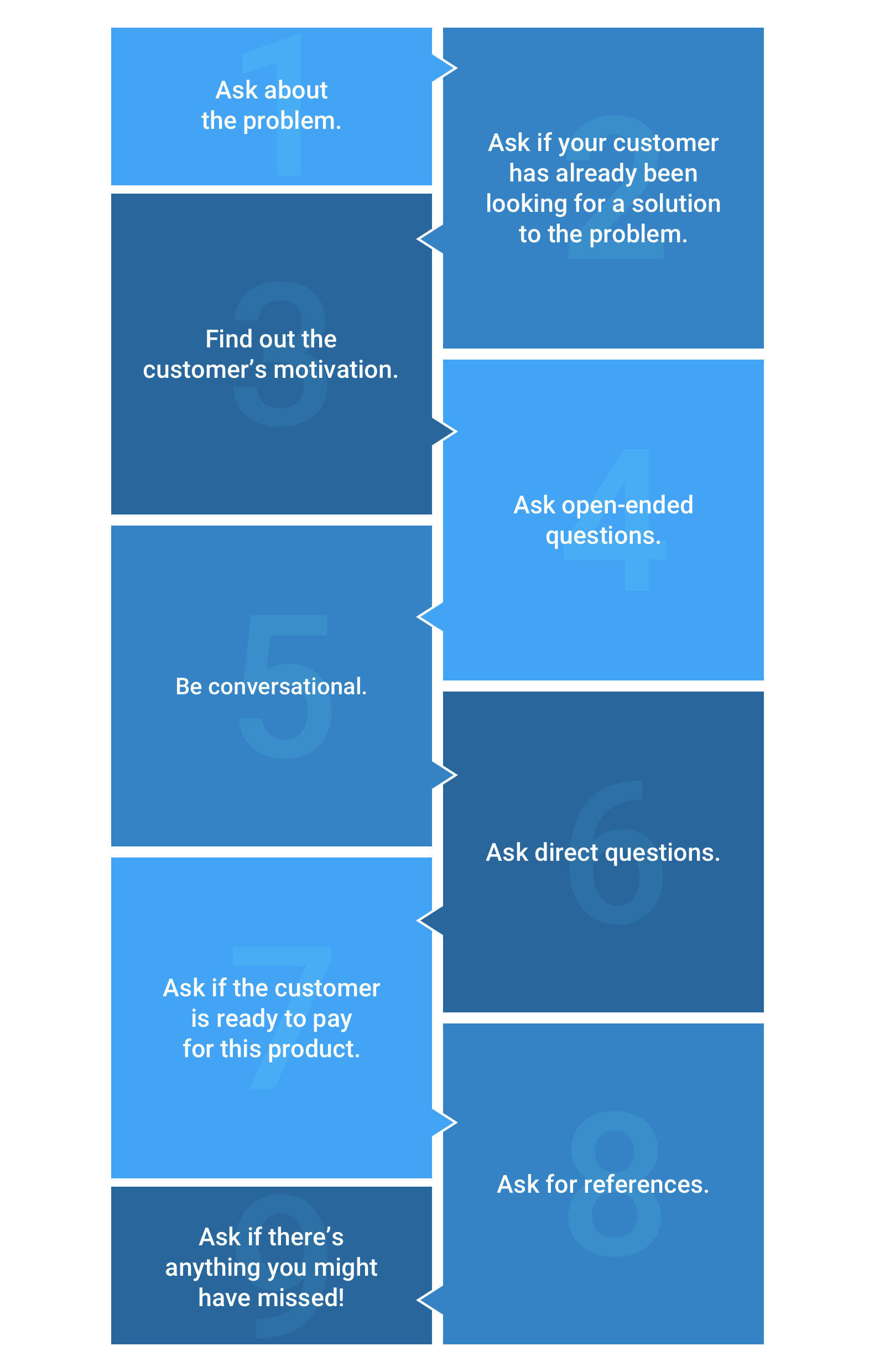
  <p class="" style="white-space:pre-wrap;">As a product manager, there’s nothing more important than having a single source of truth for discovering problems or opportunities. That source of truth is the customer. This isn’t rocket surgery to be honest but with this post I do intend to emphasise on why speaking with customers is an essential part of the product development lifecycle. Over the past year, I’ve averaged at least one customer interview per week and I still feel I should’ve done more. These interviews were in the form of job-shadowing, discovery, UX research and prototype testing. While each of these types of interviews are different, the end goal is always to ensure that you are solving a real problem for the customer and that when you go to market with a product, you ensure some amount of predictability for its success.  </p><p class="" style="white-space:pre-wrap;">We’re all familiar with the product lifecycle development stages, right? Well, here’s a simplified version that I have I created where I mention the various touch-points where customer interviews play a crucial role. </p>
</div>

  
      <img src="/assets/images/untitled-drawing-130cfe01.jpg" alt=""/>
  

<div class="sqs-html-content" data-sqsp-text-block-content>
  <p class="" style="white-space:pre-wrap;">Like any interview you undertake, preparation is important. Here are some of my learnings that I think anyone new or experienced at customer interviews might find useful. </p><h2 style="white-space:pre-wrap;"><em>Learnings</em></h2><h3 style="white-space:pre-wrap;"><strong>Segmentation</strong></h3><p class="" style="white-space:pre-wrap;"> Before talking to the customer/user, it’s important to get as much context about who she is. You want your segmentation research to give you an idea on who she is, how long has she been using your product, how active is she and how much is she paying for it. This will help you make assumptions on what drives her to use (or not use) your product.   </p><h3 style="white-space:pre-wrap;"><strong>Have a script ready</strong></h3><p class="" style="white-space:pre-wrap;"> It’s always handy to have a script prepared on what questions you plan to ask the user. This not only helps you bring a structure to the interview but as you interview many users, a script ensures that the same research methodology is applied in the entire set of interviewees.  </p><h3 style="white-space:pre-wrap;"><strong>Avoid leading questions</strong></h3><p class="" style="white-space:pre-wrap;">Leading questions would probably form an entire chapter in a book about doing good customer interviews. However, if I were to extract the gist of it, it could be simply put as - “Avoid questions that can be answered with a yes or a no”. Leading questions do not add value to the research process as you fail to understand factors influencing users’ decisions or their emotional state. The answers you seek in interviews should not be biased by the questions but rather you want customers to open up about their experiences. For example, if you ask a user - “Are you having problems with our product X?” The answer could be a curt ‘no’ or a ‘yes’. But if you frame the question as “Can you walk me through how you use our product X?” The latter helps pinpoint the journey of the user and the “problems” that you seek will be revealed in due course of time with follow-up questions. Refer to the next point below on the five whys.   </p><h3 style="white-space:pre-wrap;"><strong>The five whys</strong></h3><p class="" style="white-space:pre-wrap;"> This is a simple yet effective technique to get to the bottom of a problem. It was first conceived in the Toyota production facility for identifying bugs. In the interview setting, it is brutal and unrelenting when used in the right manner. The short version of how this is done is when the interviewer persistently quizzes the user with a “why?” and follows that with another “why?”. At times, insights are derived before the fifth why is asked but it’s the process that matters more. This could be an example of asking the five whys: <br><em>Me: You’ve been using our product X for 2 years now. Can you walk me through how you interact with feature Z.<br> User: I actually don’t use feature Z. <br> Me: Why don’t you use feature Z?<br> User: I don’t know, it looks complicated. <br> Me: Why do you think it is complicated?  <br>User: I visit the page and I see a lot of text that I don’t understand.  <br>Me: Alright, why do you feel that way?  <br>User: English is not my first language and I also prefer to see a tutorial video to understand how to use a new feature</em><br>. …and the process continues but I hope you catch my drift. </p><h3 style="white-space:pre-wrap;"><strong>Don’t listen to the user’s solutions</strong></h3><p class="" style="white-space:pre-wrap;"> It’s easy to fall prey to what the user/customer says about your product. The caveat here is that the customer is not always right. It is imperative as an interviewer to understand what problem the user is facing rather than accepting the solution the user instructs you to build. This is a fairly common occurrence where users lay out feature-flows and solutions down to the tiniest details. But as a product manager, you are solving problems for an entire customer/user base, not just one person who gives her version of the solution.  </p><h3 style="white-space:pre-wrap;"><strong>Record, record, record</strong></h3><p class="" style="white-space:pre-wrap;"> Record your interviews in one way or the other. If it’s an interview that is happening over video call, then you can ask the user’s permission to record the session. Or else if you have a co-interviewer who can observe and take notes during the interview, that is another good option. If all else fails, you need to brush up on your note-taking abilities. You wouldn’t want to miss out on key insights during the interview process that you can revisit at a later time.  </p><h3 style="white-space:pre-wrap;"><strong>When do you stop interviewing </strong></h3><p class="" style="white-space:pre-wrap;">This is quite a common question that comes up. Just how many customer interviews is enough? The unfortunate answer is that it’s never enough. But my general thumb rule is to interview as many people within a particular time period and you should stop interviewing when you see a pattern developing in your responses. In short, stop interviewing when you stop seeing variability for that set of customer interviews.</p><p class="" style="white-space:pre-wrap;">On a closing note, these learnings and observations have happened over a course of time and I hope you found them useful. While researching this topic on the interwebz to see other people’s opinions, I also came across a very useful chart on conducting interviews at the <a href="http://www.producttribe.com" target="_blank">Product Tribe</a> which is quite share-worthy.</p><p class="" style="white-space:pre-wrap;"> Until my next post, happy interviewing!</p>
</div>

  
      <img src="/assets/images/Img-5-2x-2-45c6351c.png" alt=""/>
  

<div class="sqs-html-content" data-sqsp-text-block-content>
  <p class="" style="white-space:pre-wrap;">Source: <a href="https://producttribe.com/product-management/customer-interviews-guide">https://producttribe.com/product-management/customer-interviews-guide</a></p>
</div>]]></content><author><name>Vince J</name></author><category term="productmanagement" /><summary type="html"><![CDATA[As a product manager, there’s nothing more important than having a single source of truth for discovering problems or opportunities. That source of truth is the customer. This isn’t rocket surgery to be honest but with this post I do intend to emphasise on why speaking with customers is an essential part of the product development lifecycle. Over the past year, I’ve averaged at least one customer interview per week and I still feel I should’ve done more. These interviews were in the form of job-shadowing, discovery, UX research and prototype testing. While each of these types of interviews are different, the end goal is always to ensure that you are solving a real problem for the customer and that when you go to market with a product, you ensure some amount of predictability for its success. We’re all familiar with the product lifecycle development stages, right? Well, here’s a simplified version that I have I created where I mention the various touch-points where customer interviews play a crucial role.]]></summary></entry><entry><title type="html">Podcasts for Product Managers</title><link href="https://www.vcent.in/writing/2018/02/21/podcasts-for-product-managers/" rel="alternate" type="text/html" title="Podcasts for Product Managers" /><published>2018-02-21T00:30:44+00:00</published><updated>2018-02-21T00:30:44+00:00</updated><id>https://www.vcent.in/writing/2018/02/21/podcasts-for-product-managers</id><content type="html" xml:base="https://www.vcent.in/writing/2018/02/21/podcasts-for-product-managers/"><![CDATA[<div class="sqs-html-content" data-sqsp-text-block-content>
  <p class="" style="white-space:pre-wrap;">2016 saw me really dive into the world of podcasts. I felt this urge of making my commute times more productive, so I turned to podcasts. With some advice from fellow podcast listening friends, I downloaded the <a href="https://www.google.co.in/url?sa=t&amp;rct=j&amp;q=&amp;esrc=s&amp;source=web&amp;cd=1&amp;cad=rja&amp;uact=8&amp;ved=0ahUKEwj5r5bArunYAhULw7wKHeeABPcQFggoMAA&amp;url=https%3A%2F%2Fplay.google.com%2Fstore%2Fapps%2Fdetails%3Fid%3Dcom.bambuna.podcastaddict%26hl%3Den&amp;usg=AOvVaw1NwCh012hACyPH3dUni-R4" target="_blank">Podcast Addict</a>&nbsp;app (I now use <a href="https://play.google.com/store/apps/details?id=au.com.shiftyjelly.pocketcasts&amp;hl=en" target="_blank">Pocket Casts</a> and it's 100x better) and I was off to the races!</p><p class="" style="white-space:pre-wrap;">Coincidentally, the period of 2016-17 was the time when I was sinking my teeth further into the field of product management. Here's a joke - "How does one know if a person is a Product Manager?". "S/he'll tell you about it, blog about it, podcast about it and create a PPT about it". Okay I made that up. But the point I'm trying to make here is that there's a lot of material on podcasts directed at new and experienced product managers alike.</p><p class="" style="white-space:pre-wrap;">Keeping my cynicism aside, I <em>have</em> learnt a lot from these podcasts. They give you a sense that the playing fields are levelled, you can up-skill hard and soft skills, and eventually, you feel at par with accomplished product managers in marquee companies. I'm going to use this opportunity to mention a bunch of podcasts that have helped me grow as a product manager over the past two years. Please note that the list is not in any order of preference.&nbsp;</p><p class="" style="white-space:pre-wrap;"><strong>1. This is Product Management</strong><br>This is arguably the most popular podcast for product managers out there. Their amazing catalog of podcasts covers every imaginable topic a product manager would want to listen to. TIPM is produced by the team at Alpha, a tool for generating user insights. While TIPM is vast, I find the tone of the podcasts fairly monotonous. It's less conversational and more of doling out advice or product experiences. Nevertheless, it's a great place to start or revisit for certain key topics.&nbsp;<br>Listen:&nbsp;<a href="https://www.thisisproductmanagement.com/" target="_blank">https://www.thisisproductmanagement.com/</a></p><p class="" style="white-space:pre-wrap;"><strong>2. Rocketship.fm</strong><br>Rocketship.fm does a great job of creating stories for each of their topics, which makes it a very enjoyable podcast.&nbsp;They usually have a recurring theme across a series of podcasts. It's a podcast that helps a layman understand the goings-on in startup life. While the podcast covers general topics, of late, they have been talking a lot about product related topics. There's a very interesting episode on the origin of product management which talks about the 'Brand Men'&nbsp;at P&amp;G (circa 1930s). For the compelling stories, structure and conversations, I rate this podcast highly.<br>Listen:&nbsp;<a href="http://rocketship.fm/" target="_blank">http://rocketship.fm/</a></p><p class="" style="white-space:pre-wrap;"><strong>3. Inside Intercom</strong><br>Intercom is a tool used for customer support and in-app customer engagement. While I'm not completely sold on their product, I must say that they're doing a fantastic job in getting inbound traffic via their website. They've created a blog and a podcast which comprises of a knowledge base spanning topics on product management and design.&nbsp;It's done well enough that it doesn't feel like "content for the sake of content". Des Traynor, the founder of Intercom, usually hosts the podcast and the show has had respectable guests from the startup/design/product world. There are some great conversations in the podcasts, especially the one on the Jobs-To-Be-Done framework.&nbsp;<br>Listen:&nbsp;<a href="https://blog.intercom.com/category/podcast/" target="_blank">https://blog.intercom.com/category/podcast/</a></p><p class="" style="white-space:pre-wrap;"><strong>4. Exponent</strong><br>It doesn't get more credible than Exponent when it comes to the people behind the podcast. Exponent is run by Ben Thompson, author/founder of Stratechery, and James Allworth, author and Harvard Business Review writer. Exponent isn't directed at product managers but they often talk about over-arching problems, trends, innovations in the technology space. Whether it's AI/ML/Bitcoin, Amazon's dominance or Facebook's newsfeed algorithms, there is always something useful for the listener. The hosts (and guests) pick each other's brains on several topics every week. Prepare yourself for some great analysis and deep-dives into interesting subjects on the Exponent.<br>Listen:&nbsp;<a href="http://exponent.fm/" target="_blank">http://exponent.fm/</a></p><p class="" style="white-space:pre-wrap;"><strong>5. Product Popcorn</strong><br>Product Popcorn is the Aubrey Plaza of product podcasts. By that I mean, it's quirky and funny. Product Popcorn is hosted by Kimberly and Adam, who will give their light-hearted take on product management interspersed with elephant trumpet sounds. What I love about this podcast is that you'll feel like it's a roundtable discussion with friends. Another aspect of the podcast that I love is that the hosts share updates on their own professional lives, something like a stand-up meeting update. It helps you connect with the hosts and what they encounter on a daily/weekly basis while PMing. I would 12/10 recommend a listen.&nbsp;<br>Listen:&nbsp;<a href="https://www.productpopcorn.com/" target="_blank">https://www.productpopcorn.com/</a></p><p class="" style="white-space:pre-wrap;"><strong>6. The Startup Chat</strong><br>With close to 300 episodes, the Startup Chat is an important podcast for entrepreneurs and startup folk. It's hosted by Hiten Shah (founder of Kissmetrics) and Steli Efti (founder of close.io), who have been hustling for over 10 years. This podcast pretty much covers all the bases on advice related to starting a startup, the modalities of running one and the specifics on key topics like hiring, processes and more. The episodes usually don't run over 20-25min, which makes it very easily consumable and retainable. I also love how Hiten and Steli can be at loggerheads with each other during debates on "controversial" topics. This podcast becomes more relevant if you're a product manager at a startup because you see these different flavors play out around you.&nbsp;<br>Listen:&nbsp;<a href="https://thestartupchat.com/" target="_blank">https://thestartupchat.com/</a></p>
</div>]]></content><author><name>Vince J</name></author><category term="productmanagement" /><summary type="html"><![CDATA[2016 saw me really dive into the world of podcasts. I felt this urge of making my commute times more productive, so I turned to podcasts. With some advice from fellow podcast listening friends, I downloaded the Podcast Addict&nbsp;app (I now use Pocket Casts and it's 100x better) and I was off to the races!Coincidentally, the period of 2016-17 was the time when I was sinking my teeth further into the field of product management. Here's a joke - "How does one know if a person is a Product Manager?". "S/he'll tell you about it, blog about it, podcast about it and create a PPT about it". Okay I made that up. But the point I'm trying to make here is that there's a lot of material on podcasts directed at new and experienced product managers alike.Keeping my cynicism aside, I have learnt a lot from these podcasts. They give you a sense that the playing fields are levelled, you can up-skill hard and soft skills, and eventually, you feel at par with accomplished product managers in marquee companies. I'm going to use this opportunity to mention a bunch of podcasts that have helped me grow as a product manager over the past two years. Please note that the list is not in any order of preference.&nbsp;1. This is Product ManagementThis is arguably the most popular podcast for product managers out there. Their amazing catalog of podcasts covers every imaginable topic a product manager would want to listen to. TIPM is produced by the team at Alpha, a tool for generating user insights. While TIPM is vast, I find the tone of the podcasts fairly monotonous. It's less conversational and more of doling out advice or product experiences. Nevertheless, it's a great place to start or revisit for certain key topics.&nbsp;Listen:&nbsp;https://www.thisisproductmanagement.com/2. Rocketship.fmRocketship.fm does a great job of creating stories for each of their topics, which makes it a very enjoyable podcast.&nbsp;They usually have a recurring theme across a series of podcasts. It's a podcast that helps a layman understand the goings-on in startup life. While the podcast covers general topics, of late, they have been talking a lot about product related topics. There's a very interesting episode on the origin of product management which talks about the 'Brand Men'&nbsp;at P&amp;G (circa 1930s). For the compelling stories, structure and conversations, I rate this podcast highly.Listen:&nbsp;http://rocketship.fm/3. Inside IntercomIntercom is a tool used for customer support and in-app customer engagement. While I'm not completely sold on their product, I must say that they're doing a fantastic job in getting inbound traffic via their website. They've created a blog and a podcast which comprises of a knowledge base spanning topics on product management and design.&nbsp;It's done well enough that it doesn't feel like "content for the sake of content". Des Traynor, the founder of Intercom, usually hosts the podcast and the show has had respectable guests from the startup/design/product world. There are some great conversations in the podcasts, especially the one on the Jobs-To-Be-Done framework.&nbsp;Listen:&nbsp;https://blog.intercom.com/category/podcast/4. ExponentIt doesn't get more credible than Exponent when it comes to the people behind the podcast. Exponent is run by Ben Thompson, author/founder of Stratechery, and James Allworth, author and Harvard Business Review writer. Exponent isn't directed at product managers but they often talk about over-arching problems, trends, innovations in the technology space. Whether it's AI/ML/Bitcoin, Amazon's dominance or Facebook's newsfeed algorithms, there is always something useful for the listener. The hosts (and guests) pick each other's brains on several topics every week. Prepare yourself for some great analysis and deep-dives into interesting subjects on the Exponent.Listen:&nbsp;http://exponent.fm/5. Product PopcornProduct Popcorn is the Aubrey Plaza of product podcasts. By that I mean, it's quirky and funny. Product Popcorn is hosted by Kimberly and Adam, who will give their light-hearted take on product management interspersed with elephant trumpet sounds. What I love about this podcast is that you'll feel like it's a roundtable discussion with friends. Another aspect of the podcast that I love is that the hosts share updates on their own professional lives, something like a stand-up meeting update. It helps you connect with the hosts and what they encounter on a daily/weekly basis while PMing. I would 12/10 recommend a listen.&nbsp;Listen:&nbsp;https://www.productpopcorn.com/6. The Startup ChatWith close to 300 episodes, the Startup Chat is an important podcast for entrepreneurs and startup folk. It's hosted by Hiten Shah (founder of Kissmetrics) and Steli Efti (founder of close.io), who have been hustling for over 10 years. This podcast pretty much covers all the bases on advice related to starting a startup, the modalities of running one and the specifics on key topics like hiring, processes and more. The episodes usually don't run over 20-25min, which makes it very easily consumable and retainable. I also love how Hiten and Steli can be at loggerheads with each other during debates on "controversial" topics. This podcast becomes more relevant if you're a product manager at a startup because you see these different flavors play out around you.&nbsp;Listen:&nbsp;https://thestartupchat.com/]]></summary></entry><entry><title type="html">The Hard Thing About Hard Things - Book Review</title><link href="https://www.vcent.in/writing/2017/11/27/the-hard-thing-about-hard-things-review/" rel="alternate" type="text/html" title="The Hard Thing About Hard Things - Book Review" /><published>2017-11-29T13:12:57+00:00</published><updated>2017-11-29T13:12:57+00:00</updated><id>https://www.vcent.in/writing/2017/11/27/the-hard-thing-about-hard-things-review</id><content type="html" xml:base="https://www.vcent.in/writing/2017/11/27/the-hard-thing-about-hard-things-review/"><![CDATA[<div class="sqs-html-content" data-sqsp-text-block-content>
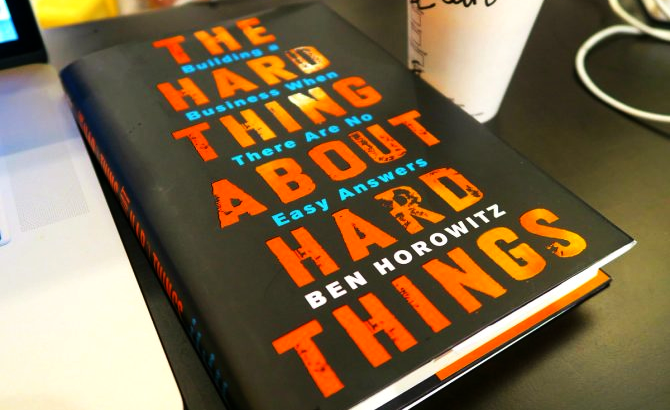
  <p class="" style="white-space:pre-wrap;">If there's one feeling that you will be left with after reading Ben Horowitz's '<em>The Hard Thing About Hard Things</em>' is that you'd be kicking yourself for not having read it earlier. In my opinion, it is the definitive guide to doing business whether you're an entrepreneur, a sales guy, a product manager or a team leader in any department.&nbsp;</p>
</div>

  
       <figure><img src="/assets/images/Clipboard01-57a155c0.png" alt=" Image picked up from Google image search "/><figcaption>Image picked up from Google image search</figcaption></figure> 
  

<div class="sqs-html-content" data-sqsp-text-block-content>
  <p class="" style="white-space:pre-wrap;">One of the primary motivations for me to pick up '<em>The Hard Thing about Hard Things</em>' is the essay titled '<em>Good Product Manager, Bad Product Manager</em>'. This was first featured in the book and has been widely touted as a 101 reading for all aspiring product managers. And rightfully so. I had read that essay a couple of years ago and it outlines the qualities of good product managers and how most fall into the trap of certain bad habits. It's essentially a list of dos and don'ts.&nbsp;A good product manager makes a team a winning one, whereas a bad product manager creates negative value for the team.&nbsp;The essay can be <a href="https://a16z.com/2012/06/15/good-product-managerbad-product-manager/" target="_blank">read here</a>.</p><p class="" style="white-space:pre-wrap;">But moving on to the book on the whole, it was an easy read. I suspect this would even be entertaining for a reader if s/he is not well versed with business jargon. Each chapter comprises of the choicest anecdotes from Ben's expansive career from Netscape to Loudcloud to Opsware to HP and finally a16z. All of these stories, if not relatable, will evoke a sense of empathy with Ben's narration. I love the honesty and the struggle behind each of the big decisions Ben, as an entrepreneur, had to make.</p><p class="" style="white-space:pre-wrap;">'<em>The Hard Thing &nbsp;About Hard Things</em>' succeeds like no other business book because it embraces failures while instilling advice and leaving you with memorable takeaways. Sure, what you may face as a future entrepreneur may or may not mirror Ben's or Marc's (Andreessen) struggles but the learnings are timeless and many of them can be applied in different scenarios. For example, no matter what team you lead, your team members will have the base expectation of you not bullshitting them. Many team leads and CEOs fall prey to this. This is one of the basic principles that is hammered to the reader with many of the stories. Some of the other key lessons that Ben talks about is going against the grain of the executive management or board members. Important decisions often get swayed by group-think or risk-averseness. It's your job as a CEO/manager to champion the tough decisions especially when you have corroborating evidence of a positive hypothesis, whether data leads you that way or it's customer feedback or market research, what have you.</p><p class="" style="white-space:pre-wrap;">As you progress through the book, you will realize that Ben's narration pretty much covers the major events in the life cycle of a company. Some of those are:</p><ul data-rte-list="default"><li><p class="" style="white-space:pre-wrap;">Working in a startup and scaling it</p></li><li><p class="" style="white-space:pre-wrap;">Product - Market fit</p></li><li><p class="" style="white-space:pre-wrap;">Fending off competition from incumbents</p></li><li><p class="" style="white-space:pre-wrap;">Excelling at sales</p></li><li><p class="" style="white-space:pre-wrap;">Knowing the true value of your company/product</p></li><li><p class="" style="white-space:pre-wrap;">People management as your company scales</p></li><li><p class="" style="white-space:pre-wrap;">Knowing when to go public with your company</p></li><li><p class="" style="white-space:pre-wrap;">Knowing when to get acquired</p></li></ul><p class="" style="white-space:pre-wrap;">One criticism that this book faces is that most of the stories predate the current <em>millennial-tech-ecosystem</em>. Okay that's not really a thing (or is it?).&nbsp;But I hope you get my drift. The companies mentioned in examples by Ben aren't glamorous but they're hardcore businesses which survived the 2000 dot-com bubble, made hundreds of millions of dollars and one even being valued at $1.6 billion dollars in the mid 2000s. If those aren't great benchmarks, I don't know what are. Just because a Snapchat may have a completely different model, doesn't mean that their teams don't struggle with sales or people problems.&nbsp;A lot of the learning in this book stems from principles of doing business and handling situations.</p><p class="" style="white-space:pre-wrap;"><em>The Hard Thing About Hard Things</em>&nbsp;is not an entrepreneur's playbook to success but it's a warning to that lot that...well...shit happens! And when you realize that you've been dealt a bad hand, Ben proves that there are still ways to maneuver through them and come out standing. It's a book to be re-read multiple times!&nbsp;</p><p class="" style="white-space:pre-wrap;">I'm going to wrap this up by quoting some of my favorite lines from the book. There are many to choose from but these quotes were an instant home-run for me and they left me nodding profusely in agreement.&nbsp;</p><p class="" style="white-space:pre-wrap;"><em>"Note to self: It’s a good idea to ask, “What am I not doing?"</em></p><p class="" style="white-space:pre-wrap;"><em>"Take care of the People, the Products and the Profits - In that order."</em></p><p class="" style="white-space:pre-wrap;"><em>"If you're going to eat shit, don't nibble!"</em></p><p class="" style="white-space:pre-wrap;"><em>"A healthy company culture encourages people to share bad news. A company that discusses its problems freely and openly can quickly solve them. A company that covers up its problems frustrates everyone involved."</em></p><p class="" style="white-space:pre-wrap;"><em>"Having dogs at work and yoga aren't culture!"</em></p><p class="" style="white-space:pre-wrap;">&nbsp;</p>
</div>]]></content><author><name>Vince J</name></author><category term="productmanagement" /><category term="Startup" /><category term="bookreviews" /><summary type="html"><![CDATA[If there's one feeling that you will be left with after reading Ben Horowitz's 'The Hard Thing About Hard Things' is that you'd be kicking yourself for not having read it earlier. In my opinion, it is the definitive guide to doing business whether you're an entrepreneur, a sales guy, a product manager or a team leader in any department.&nbsp;]]></summary></entry><entry><title type="html">The 2nd and 3rd Ps of being a PM</title><link href="https://www.vcent.in/writing/2017/7/14/the-second-and-third-ps-of-being-a-pm/" rel="alternate" type="text/html" title="The 2nd and 3rd Ps of being a PM" /><published>2017-07-13T23:17:00+00:00</published><updated>2017-07-13T23:17:00+00:00</updated><id>https://www.vcent.in/writing/2017/7/14/the-second-and-third-ps-of-being-a-pm</id><content type="html" xml:base="https://www.vcent.in/writing/2017/7/14/the-second-and-third-ps-of-being-a-pm/"><![CDATA[<div class="sqs-html-content" data-sqsp-text-block-content>
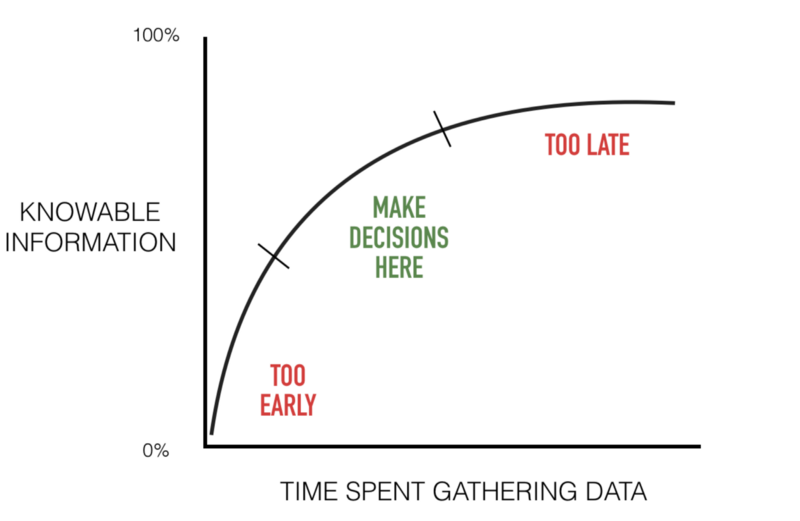
  <p class="" style="white-space:pre-wrap;">I guess I’m ultimately calling this the <em>3Ps of being a PM</em>. Very Kotler. Much jargon. In the off chance that you missed the first post where I talk about <em>Prioritization</em> being the first and foremost attribute of a product manager, you can <a href="/writing/2017/2/8/the-first-p-of-being-a-pm" target="_blank">read it here</a>.&nbsp;</p><p class="" style="white-space:pre-wrap;">At the outset, a product manager is required to have a very good understanding of the market, competition, business models, future trends apart from knowing the user thoroughly. The insights gained from the above and channelized into better decision making is what, I reckon, constitutes the second important P of being a product manager — <em>Pulse</em>.&nbsp;</p><p class="" style="white-space:pre-wrap;">I may be oversimplifying it but with my limited experience and reading about product failures and successes, it is very important for the product manager to have her ears close to the ground. This enables you to not only understand the environment in which your product is being used/consumed but it also helps you predict/anticipate for the foreseeable future to a certain degree.&nbsp;</p><ul data-rte-list="default"><li><p class="" style="white-space:pre-wrap;">Getting a pulse of your customers’ problems, needs, aspirations, behavior helps you build better products. Clearly, a no-brainer.</p></li><li><p class="" style="white-space:pre-wrap;">Getting a pulse of your competition helps you identify your competitive advantage. Go a step further and talk to your competitor’s customers. It helps you beyond the realm of product management, say if, Company X is kick ass at marketing. Can those serve as inputs to your internal stakeholders? Or can there be possible synergies that can be explored to benefit you and the competitor?</p></li><li><p class="" style="white-space:pre-wrap;">Getting a pulse on trends helps you build better products. Trends would encompass everything from market/economy to consumer/behavioral to technology. How would you incorporate these trends to make your product better?</p></li><li><p class="" style="white-space:pre-wrap;">Acting on impulse helps you build products effectively and efficiently. Here’s a really neat graph published by <a href="https://hackernoon.com/what-makes-a-great-product-manager-3c1d03b90356" target="_blank">Hacker Noon</a> which hits the spot about what I’m trying to get at. This point transcends the scientific aspect of being a product manager and makes it seem like product management is also an art form. Unfortunately, this can be learnt only through experience, but here’s a heads up nonetheless.</p></li></ul>
</div>

  
      <img src="/assets/images/image-asset-c8d359c0.png" alt=""/>
  

<div class="sqs-html-content" data-sqsp-text-block-content>
  <p class="" style="white-space:pre-wrap;">All in all, pulse, is a very fluffy word to describe what I just wrote but I believe the best product managers have this as an unsaid trait. It comes naturally to the curious and the ambitious. Personally, I’ve been trying to better myself at getting a pulse of the aforementioned things. I try to read more, I listen to relevant podcasts and I avoid any blinders restricting my vision lest I miss out on anything.&nbsp;</p><p class="" style="white-space:pre-wrap;">So…great, you’ve nailed your product-market fit, you’ve validated your ideas, you’ve prioritized your backlog…what next?&nbsp;</p><p class="" style="white-space:pre-wrap;">The third important P of being a product manager is <em>Project Execution</em>. Notice, how I don’t say project management. How a product manager brings design and technology together is what constitutes execution to me. Project execution would certainly vary from company to company. In more established companies like an Amazon or Facebook, a product manager isn’t alone in execution. One works with technical product managers, program managers, engineering managers, tech/dev leads and so on. But if you’re in a seed-funded or series A funded startup, product managers end up playing a larger role in execution. The scope of responsibilities vary, but I’m going to talk from my own personal experience.&nbsp;</p><ul data-rte-list="default"><li><p class="" style="white-space:pre-wrap;">People — The success of project execution solely depends on your team. It is important for the entire team (designers, engineers, QA testers) to be on the same page. But hey, you’re a product manager. You have no authority over everyone else. This is where as a product manager, you need to play your ‘<em>people skills</em>’ cards well. I strongly believing that motivating the team before and after the project, irrespective of the size of the release, is key to having the team stick together. You show them impact, the potential of a product they’re building and how important each of their contributions are. A product manager must in no way take credit away from the team, after all they’re doing all the heavy lifting. Sure, you “conceptualized” the idea but make no mistake about it — your team will lose faith in you.</p></li><li><p class="" style="white-space:pre-wrap;">Timelines — You will need to approximate timelines pre-development while sprint planning. You will need to get finer timelines from design and development. You will need to give out timelines with additional buffer, wherever necessary, to your stakeholders. Timelines are sacrosanct. There will definitely be times where you don’t meet these deadlines but it’s crucial to inform your stakeholders about any delay and possible alternative timelines.</p></li><li><p class="" style="white-space:pre-wrap;">Development — If you’re a non-technical product manager, you would be solely reliant on your engineer leads or senior engineers. Invariably, engineers do come back to product managers with doubts, cases missed, cases where they’re block. It’s your role as a product manager to ensure that any doubts/blockers are swiftly resolved. You gain the respect of an engineer if you clear her blockers promptly.</p></li><li><p class="" style="white-space:pre-wrap;">Testing — One of my strengths as a product manager is that I’m very hands-on with my product during development and testing. The more rigorous the testing, the fewer chances of your product failing in the user’s hands. Once the engineer(s) hand over the product to the QA team for testing, I step in between to do a pre-UAT (user acceptance test) where I try to ensure that the product is behaving as it should for the users’ major cases. I say ‘major cases’ because you are generally constrained for time. The pre-UAT testing phase significantly reduces the back-and-forth exchanges between QA and engineers. Once the QA team gives a sign off on product testing, I usually perform a UAT thoroughly to ensure that the product is ready to be shipped.</p></li><li><p class="" style="white-space:pre-wrap;">Shipping — Here you have it, your feature/product moved from a staging test bed to your production servers. I prefer to ship out new releases on Tuesday, Wednesday, Thursdays or when the next day is not a holiday. That’s because in the slightest chance that there is a bug, you have the team available to quickly re-ship a bug-free version as soon as possible.</p></li><li><p class="" style="white-space:pre-wrap;">Post-shipping — Is a product manager’s job done after shipping? Hell no. Sure you may have dusted your hands and got that awesome product released. While this doesn’t fall under the purview of ‘execution’, how else will you measure how successful it is? Are your users using the product as intended? Whether it’s a beta release or a full fledged roll-out, it is essential to choose the right metrics and have those metrics closely monitored either via data pulled from the database or analytics tools like Google Analytics or Mixpanel. A topic like measuring success metrics would require its own blog post.</p></li></ul><p class="" style="white-space:pre-wrap;">So there we have it — <em>Pulse</em> and <em>Project Execution</em>, the two remaining Ps in what makes my three essential Ps of being a product manager. While I can’t cover everything with this 3Ps post because, let’s face it, product management is a fluid field, part science and part art.&nbsp;</p><p class="" style="white-space:pre-wrap;">I would love any feedback on this post. Do write in at me@vcent.in if you would like to talk further about product management.&nbsp;</p>
</div>]]></content><author><name>Vince J</name></author><category term="productmanagement" /><summary type="html"><![CDATA[I guess I’m ultimately calling this the 3Ps of being a PM. Very Kotler. Much jargon. In the off chance that you missed the first post where I talk about Prioritization being the first and foremost attribute of a product manager, you can read it here.&nbsp;At the outset, a product manager is required to have a very good understanding of the market, competition, business models, future trends apart from knowing the user thoroughly. The insights gained from the above and channelized into better decision making is what, I reckon, constitutes the second important P of being a product manager — Pulse.&nbsp;I may be oversimplifying it but with my limited experience and reading about product failures and successes, it is very important for the product manager to have her ears close to the ground. This enables you to not only understand the environment in which your product is being used/consumed but it also helps you predict/anticipate for the foreseeable future to a certain degree.&nbsp;Getting a pulse of your customers’ problems, needs, aspirations, behavior helps you build better products. Clearly, a no-brainer.Getting a pulse of your competition helps you identify your competitive advantage. Go a step further and talk to your competitor’s customers. It helps you beyond the realm of product management, say if, Company X is kick ass at marketing. Can those serve as inputs to your internal stakeholders? Or can there be possible synergies that can be explored to benefit you and the competitor?Getting a pulse on trends helps you build better products. Trends would encompass everything from market/economy to consumer/behavioral to technology. How would you incorporate these trends to make your product better?Acting on impulse helps you build products effectively and efficiently. Here’s a really neat graph published by Hacker Noon which hits the spot about what I’m trying to get at. This point transcends the scientific aspect of being a product manager and makes it seem like product management is also an art form. Unfortunately, this can be learnt only through experience, but here’s a heads up nonetheless.]]></summary></entry><entry><title type="html">It’s another world under the microscope</title><link href="https://www.vcent.in/writing/2017/3/30/its-another-world-under-the-microscope/" rel="alternate" type="text/html" title="It’s another world under the microscope" /><published>2017-03-30T05:53:00+00:00</published><updated>2017-03-30T05:53:00+00:00</updated><id>https://www.vcent.in/writing/2017/3/30/its-another-world-under-the-microscope</id><content type="html" xml:base="https://www.vcent.in/writing/2017/3/30/its-another-world-under-the-microscope/"><![CDATA[<div class="sqs-html-content" data-sqsp-text-block-content>
  <p class="" style="white-space:pre-wrap;">It's amazing what one can discover under the microscope. Good friend and pathologist, <a href="https://twitter.com/Ochichis" target="_blank">Ochichis</a>, often sends me amusing photos of oddly shaped red blood cells. Whether it's your eyes playing trickery or something else, you be the judge.&nbsp;</p>
</div>

<div class="image-gallery-wrapper">

  
   <img src="/assets/images/4-562e35bf.jpeg" />


   <img src="/assets/images/6-aff37980.jpeg" />


   <img src="/assets/images/7-93468600.jpeg" />


   <img src="/assets/images/5-a1ab75e7.jpeg" />


   <img src="/assets/images/1-3cf27dae.jpeg" />


   <img src="/assets/images/3-bb6cb9c6.jpeg" />


   <img src="/assets/images/2-fa61feed.jpeg" />
  

</div>

<div class="sqs-html-content" data-sqsp-text-block-content>
  <p class="" style="white-space:pre-wrap;">Fascinating, non?</p>
</div>]]></content><author><name>Vince J</name></author><summary type="html"><![CDATA[It's amazing what one can discover under the microscope. Good friend and pathologist, Ochichis, often sends me amusing photos of oddly shaped red blood cells. Whether it's your eyes playing trickery or something else, you be the judge.&nbsp;]]></summary></entry><entry><title type="html">The first P of being a PM</title><link href="https://www.vcent.in/writing/2017/2/8/the-first-p-of-being-a-pm/" rel="alternate" type="text/html" title="The first P of being a PM" /><published>2017-02-08T12:15:00+00:00</published><updated>2017-02-08T12:15:00+00:00</updated><id>https://www.vcent.in/writing/2017/2/8/the-first-p-of-being-a-pm</id><content type="html" xml:base="https://www.vcent.in/writing/2017/2/8/the-first-p-of-being-a-pm/"><![CDATA[<div class="sqs-html-content" data-sqsp-text-block-content>
  <p class="" style="white-space:pre-wrap;">The idea for this series of posts stemmed from a completely different discussion I had with a colleague on the differences between product management and program management. I won’t delve into that but what got my mind racing was me trying to introspect on a product manager’s role. After running through a whole host of responsibilities and attributes, I finally narrowed it down on <strong><em>Prioritization</em></strong>. I believe this is the first and foremost task a product manager has to be responsible for. I did cover this briefly in my introductory post of my <a href="https://medium.com/@mollvsc/my-first-month-as-a-product-manager-2f5dd73aa87f" target="_blank">first month as a Product Manager.</a>&nbsp;</p><p class="" style="white-space:pre-wrap;"><strong><em>Why is prioritization important?</em></strong><br>As a product manager, you are measured against metrics related to your user’s goals. These metrics could range from Gross Margin Value (GMV) to Average Order Value (AOV) to Engagement (DAUs, Cohorts) and so on. There is absolutely no room for anything else if your features/releases aren’t impacting the metrics the most. It’s the holy grail. <a href="https://blog.intercom.com/rice-simple-prioritization-for-product-managers/" target="_blank">Intercom published a really informative read on prioritization</a>. They subscribe to a model called the RICE framework — Reach, Impact, Confidence and Effort. Each of these parameters are scored and the overall RICE score determines the priority of a feature. Honestly, it cannot get simpler than this. But I personally also like to leave some room for judgement and intuition as well. What follows from prioritization is the product roadmap.&nbsp;</p><p class="" style="white-space:pre-wrap;"><strong><em>Roadmap vs Ad hoc Requests</em></strong><br>A product roadmap is created after you are done prioritizing tasks and features/releases. Depending on the stage of your company, you may have a roadmap for a quarter, a year or possibly even more than that. I’ve only worked for small to medium sized startups so my product roadmaps haven’t gone beyond 6 months. I believe that once you’ve gotten the items in your roadmap prioritized, half your job is done. But wait…</p><p class="" style="white-space:pre-wrap;">…and just when you’re mid-way feeling good about your roadmap going on as planned, someone from the marketing team makes a feature-request. Someone from Finance asks for alterations in certain dashboards. Long story short, it’s a balancing act between handling ad hoc requests and ensuring you’re still on course with the roadmap. On receiving an ad hoc request, I ask myself (and the stakeholder) these high-level questions:</p><ol data-rte-list="default"><li><p class="" style="white-space:pre-wrap;">What is the impact on my user and the aforementioned metrics?</p></li><li><p class="" style="white-space:pre-wrap;">Can I measure this impact? Short term gain or long term gain?</p></li><li><p class="" style="white-space:pre-wrap;">How much of a pain point is it to the stakeholder/user?</p></li><li><p class="" style="white-space:pre-wrap;">Can I quantify or measure the pain point or criticality of #3?</p></li><li><p class="" style="white-space:pre-wrap;">Can it be resolved or shipped with a complementary feature which is already in the product roadmap?</p></li><li><p class="" style="white-space:pre-wrap;">What is the effort (quantified by time) involved?</p></li></ol><p class="" style="white-space:pre-wrap;">There are more questions but I’ll stick to the above six. Based on these, I take a hard call on whether to pursue ad hoc requests at that time or post-pone working on it or shoot it down all together.&nbsp;</p><p class="" style="white-space:pre-wrap;">What certainly helps is organizing your engineering team into developers who can work on long term features and shorter term features separately. I have seen this through experience as I’ve faced resource crunch working with small teams of about 5–6 developers. I may have groups of 2 or 3 developers working on the big ticket items which typically have a development effort of more than 1-2 weeks. On the side, I will reserve one developer who will work on relatively smaller features (development effort of ~3 days or less). If you can draw up a mental picture of a Gantt chart, you will realize that I am constantly shipping small features and/or bug fixes on a regular basis without having the major chunk of my roadmap affected. In light of this segregation of resource, I would then assign the ad hoc requests (post scrutinizing on whether to take them up, of course) to the developer working on short term features. In the worst case scenario, I would be able to get to those ad-hoc requests in a few days. There you have it, my approach on handling a roadmap with ad hoc requests. (Vincent’s secret sauce much?)</p><p class="" style="white-space:pre-wrap;"><strong><em>Dealing with stake-holders</em></strong><br>By nature of the PM role, you will be dealing with multiple stakeholders and inevitably, everyone wants their requests as soon as possible. To be specific, I’m talking about internal stakeholders of the company such as marketing, finance, sales, operations and others. Prioritization becomes important more than any where else. As I had described earlier, there will be times you have to shoot down proposals or feature requests by nature of failing the <em>ad hoc test</em>. I wish there was a surefire way of coming out with a win-win outcome. It’s subjective and depends on the context of the discussion. I have learnt though, that being empathetic with your fellow peers is a step in the right direction. Back up your reasons with data, guesstimates or strong hypothesis to ensure that your stance defensible. Without these, it’s all about people management skills. On the flip side, do take into account that these stakeholders are equally important to you and the success of your product roadmap. One such example would be at the time of product launch, you’d have to coordinate with the sales and marketing teams to conduct demos with customers/sales representatives. I guess you get my drift, right? Product managers need to develop people skills to handle such situations.&nbsp;</p><p class="" style="white-space:pre-wrap;">If there was a punk rock song about product management, it would be ‘<a href="https://www.youtube.com/watch?v=GoA_zY6tqQw" target="_blank"><em>Prioritization Über Alles</em></a><em>’</em> which translates to ‘prioritization above everything else’. It determines the success or failure of your product.&nbsp;</p><p class="" style="white-space:pre-wrap;">Stay tune for the next post — <em>The second P of being a PM</em>.</p>
</div>]]></content><author><name>Vince J</name></author><category term="productmanagement" /><category term="Prioritization" /><summary type="html"><![CDATA[The idea for this series of posts stemmed from a completely different discussion I had with a colleague on the differences between product management and program management. I won’t delve into that but what got my mind racing was me trying to introspect on a product manager’s role. After running through a whole host of responsibilities and attributes, I finally narrowed it down on Prioritization. I believe this is the first and foremost task a product manager has to be responsible for. I did cover this briefly in my introductory post of my first month as a Product Manager.&nbsp;Why is prioritization important?As a product manager, you are measured against metrics related to your user’s goals. These metrics could range from Gross Margin Value (GMV) to Average Order Value (AOV) to Engagement (DAUs, Cohorts) and so on. There is absolutely no room for anything else if your features/releases aren’t impacting the metrics the most. It’s the holy grail. Intercom published a really informative read on prioritization. They subscribe to a model called the RICE framework — Reach, Impact, Confidence and Effort. Each of these parameters are scored and the overall RICE score determines the priority of a feature. Honestly, it cannot get simpler than this. But I personally also like to leave some room for judgement and intuition as well. What follows from prioritization is the product roadmap.&nbsp;Roadmap vs Ad hoc RequestsA product roadmap is created after you are done prioritizing tasks and features/releases. Depending on the stage of your company, you may have a roadmap for a quarter, a year or possibly even more than that. I’ve only worked for small to medium sized startups so my product roadmaps haven’t gone beyond 6 months. I believe that once you’ve gotten the items in your roadmap prioritized, half your job is done. But wait……and just when you’re mid-way feeling good about your roadmap going on as planned, someone from the marketing team makes a feature-request. Someone from Finance asks for alterations in certain dashboards. Long story short, it’s a balancing act between handling ad hoc requests and ensuring you’re still on course with the roadmap. On receiving an ad hoc request, I ask myself (and the stakeholder) these high-level questions:What is the impact on my user and the aforementioned metrics?Can I measure this impact? Short term gain or long term gain?How much of a pain point is it to the stakeholder/user?Can I quantify or measure the pain point or criticality of #3?Can it be resolved or shipped with a complementary feature which is already in the product roadmap?What is the effort (quantified by time) involved?There are more questions but I’ll stick to the above six. Based on these, I take a hard call on whether to pursue ad hoc requests at that time or post-pone working on it or shoot it down all together.&nbsp;What certainly helps is organizing your engineering team into developers who can work on long term features and shorter term features separately. I have seen this through experience as I’ve faced resource crunch working with small teams of about 5–6 developers. I may have groups of 2 or 3 developers working on the big ticket items which typically have a development effort of more than 1-2 weeks. On the side, I will reserve one developer who will work on relatively smaller features (development effort of ~3 days or less). If you can draw up a mental picture of a Gantt chart, you will realize that I am constantly shipping small features and/or bug fixes on a regular basis without having the major chunk of my roadmap affected. In light of this segregation of resource, I would then assign the ad hoc requests (post scrutinizing on whether to take them up, of course) to the developer working on short term features. In the worst case scenario, I would be able to get to those ad-hoc requests in a few days. There you have it, my approach on handling a roadmap with ad hoc requests. (Vincent’s secret sauce much?)Dealing with stake-holdersBy nature of the PM role, you will be dealing with multiple stakeholders and inevitably, everyone wants their requests as soon as possible. To be specific, I’m talking about internal stakeholders of the company such as marketing, finance, sales, operations and others. Prioritization becomes important more than any where else. As I had described earlier, there will be times you have to shoot down proposals or feature requests by nature of failing the ad hoc test. I wish there was a surefire way of coming out with a win-win outcome. It’s subjective and depends on the context of the discussion. I have learnt though, that being empathetic with your fellow peers is a step in the right direction. Back up your reasons with data, guesstimates or strong hypothesis to ensure that your stance defensible. Without these, it’s all about people management skills. On the flip side, do take into account that these stakeholders are equally important to you and the success of your product roadmap. One such example would be at the time of product launch, you’d have to coordinate with the sales and marketing teams to conduct demos with customers/sales representatives. I guess you get my drift, right? Product managers need to develop people skills to handle such situations.&nbsp;If there was a punk rock song about product management, it would be ‘Prioritization Über Alles’ which translates to ‘prioritization above everything else’. It determines the success or failure of your product.&nbsp;Stay tune for the next post — The second P of being a PM.]]></summary></entry><entry><title type="html">Traction: A Startup Guide to Getting Customers</title><link href="https://www.vcent.in/writing/2016/9/6/traction-a-startup-guide-to-getting-customers/" rel="alternate" type="text/html" title="Traction: A Startup Guide to Getting Customers" /><published>2016-09-13T22:57:02+00:00</published><updated>2016-09-13T22:57:02+00:00</updated><id>https://www.vcent.in/writing/2016/9/6/traction-a-startup-guide-to-getting-customers</id><content type="html" xml:base="https://www.vcent.in/writing/2016/9/6/traction-a-startup-guide-to-getting-customers/"><![CDATA[<div class="sqs-html-content" data-sqsp-text-block-content>
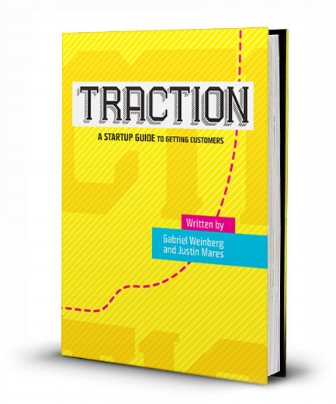
  <p class="" style="white-space:pre-wrap;">It's book review time. Since its release,&nbsp;<em>Traction</em> has become a fairly popular book, often recommended to start-up founders, aspiring entrepreneurs and anyone who is keen on growing a business exponentially. After having spent a significant time in early-stage ventures, I decided to give this book a shot to see if it resonated strongly with me.&nbsp;</p>
</div>

  
      <img src="/assets/images/image-asset-f8d434a1.jpeg" alt=""/>
  

<div class="sqs-html-content" data-sqsp-text-block-content>
  <p class="" style="white-space:pre-wrap;"><em>Traction</em>&nbsp;starts off by emphasizing greatly on a method they call the 'Bullseye Framework'. True to its name, it is a process which involves narrowing down on that ONE channel which will give you the most traction initially. This may seem very intuitive but you'll be surprised how many companies get that wrong. In summary,&nbsp;the 'Bullseye Framework'&nbsp;requires you to brainstorm on all possible traction channels, rank them on the basis of potential, run quick tests for hypothesis testing and then finally focus on that identified channel.&nbsp;&nbsp;As you progress through the book, you'll realize how central this process is for companies (as shown in the examples) in identifying their first channel.</p><p class="" style="white-space:pre-wrap;">With that as the crux of the book, the authors go on by enlisting 19 different traction channels that have worked for companies across industries. There is a dedicated chapter to each of those 19 traction channels. Some of the obvious traction channels mentioned are SEM, SEO, Display ads and Public Relations. Some of the not-so-obvious traction channels listed in the book are Engineering as Marketing, Community building and Viral Marketing (yup!).&nbsp;Each of those chapters outline the how-to, benefits and impact of the said traction channel. What adds further value are real world examples.&nbsp;One such example is about <a href="http://www.mint.com" target="_blank">Mint</a>, a website which helps users with managing finances. On starting up, the company had a goal of signing up 100,000 users in 6 months. By following the Bullseye Framework, Mint realized they could target personal blogs as their first traction channel. This led to 20,000 users signing up even before the official launch of their full-fledged product. Crazy, right? Once the company realized they were exhausting blogs and weren't seeing a spike in growth, they resorted to Public Relations as a channel. This eventually led the company to signing up 1 million users during their first 6 months.&nbsp;</p><p class="" style="white-space:pre-wrap;">What I love about this book is that it appeals to both the layman as well as the seasoned marketer. Unlike many "management" books, <em>Traction</em>&nbsp;does not faff about. There's no jargon, no worldly business advice, no bullshit.&nbsp;The book stresses upon a simple framework, emphasizes on hustling hard by rigorously testing traction channels and repeating the process in case of failure. The book also talks about the importance of dividing your time between traction and product development.</p><p class="" style="white-space:pre-wrap;"><em>Traction</em> is a short read but I can see myself getting back to it whenever I have to ponder upon any of the traction channels mentioned here.&nbsp;If it were up to me, I'd prescribe this book as essential reading for all business school students because this is as real as it gets.</p><p class="" style="white-space:pre-wrap;">You can buy the book <a href="https://www.amazon.com/Traction-Startup-Guide-Getting-Customers/dp/0976339609" target="_blank">here</a>.</p>
</div>]]></content><author><name>Vince J</name></author><category term="startup" /><category term="marketing" /><category term="bookreviews" /><summary type="html"><![CDATA[It's book review time. Since its release,&nbsp;Traction has become a fairly popular book, often recommended to start-up founders, aspiring entrepreneurs and anyone who is keen on growing a business exponentially. After having spent a significant time in early-stage ventures, I decided to give this book a shot to see if it resonated strongly with me.&nbsp;]]></summary></entry><entry><title type="html">Hairklutz (#tbt)</title><link href="https://www.vcent.in/writing/2016/7/28/hairklutz/" rel="alternate" type="text/html" title="Hairklutz (#tbt)" /><published>2016-07-28T15:37:11+00:00</published><updated>2016-07-28T15:37:11+00:00</updated><id>https://www.vcent.in/writing/2016/7/28/hairklutz</id><content type="html" xml:base="https://www.vcent.in/writing/2016/7/28/hairklutz/"><![CDATA[<div class="sqs-html-content" data-sqsp-text-block-content>
  <p class="" style="white-space:pre-wrap;">I find haircuts liberating. On the occasion of having a haircut today and it being #throwbackthursday, I thought I should revive this old blog post (circa December 2008) of mine. In this, I express an interest in going bald and wrote about a barber who refused to cut my hair short. Pretty random, yes. I'm also not correcting some obviously glaring typos that I now see. Read on.&nbsp;</p>
</div>

<div class="sqs-html-content" data-sqsp-text-block-content>
  <p class="" style="white-space:pre-wrap;">Brimming with new found enthusiasm, I dashed off to a nearby salon. I had revived the long lost feeling of wanting to go bald. This feeling first overcame my rational-thinking about two years back. It was more about succumbing to peer pressure at that time because a couple of my close friends and I had made a pact to remove every strand of hair from our heads. What became of that pact? Well I chickened out. I had to, for I realized I actually had a lot going on and I just couldn’t let some foolish pact destroy me. Until that point of time, I was maintaining an untarnished reputation of a (deceptively) simple bloke; I was interning at a reputed company and something like a shiny bald head had the potential to raise eyebrows and who knows it could’ve well caused a furore in that conservative environment.</p><p class="" style="white-space:pre-wrap;">This time it was different. I couldn’t care less.&nbsp;I know I won’t be subjected to a before-and-after scrutiny by any acquaintance of mine, because quite frankly I know no one here. On that positive note and with a brimful cup of enthusiasm, I dashed off to a nearby salon.</p><p class="" style="white-space:pre-wrap;">I found the barber in a pensive mood. He probably hadn’t had a customer all day. With the ol’ wave-of-the-hand-in-front-of-the-face, I got his attention and the cutting of hair got underway. As opposed to how the biblical Samson felt about haircuts, I’ve always felt it was in a way, metaphorically speaking, self liberating as it injected new life into me while getting rid of excess baggage. This time though, I was going for full self-liberation!</p><p class="" style="white-space:pre-wrap;">I directed the barber to use the machine and shave off everything. Paying little attention to what I had said, he flexed his fingers and crackled his wrist joints and finally spoke, “It won’t look good on you, sir”. “But this is how I want it”, I demanded. Again, casually chewing his paan he proceeded to trim the sides of my head without paying any heed to what I had to say. I was flummoxed. My calm disposition prevented me from leaving the place promptly and I somehow consoled myself with the thoughts of telling him to trim it all off when he’d reach the top of my head.</p><p class="" style="white-space:pre-wrap;">The scissors slowly meandered around my head, cut a micrometer of hair with each stroke and paused. The barber would then take a moment to analyze his work and with an artistic gleam in his eye, he’d proceed to slash another couple of micrometers. What Monsieur Van Gogh (ha!) didn’t realize was that he spent close to twenty-five minutes only on the sides of my head. Maybe it was his intention to do so while slowly and tastefully culminating to the top or maybe he was just bored. That seems perfectly fine if you are a, dare I say, connoisseur and an appreciator of fine (hair-)art. I’m not and my plans of getting a brisk haircut were thwarted by this fool of a person. I had to put a stop to this madness. “The sides are quite short…that’s fine. Now cut the top as short as you’ve cut the sides.” That sure told him right?! He nodded in agreement but the moment I mentioned, “…use the machine”, he was taken aback and disapprovingly said, “It’ll be very short. It won’t look good. I’ll use the kenchi and give you a nice slope-cut”. At this point of time, I was convinced that he wasn’t going to be able to do what I asked. I gave up point blank and ended up getting just another haircut. I could smell victory in his faint humming. Bastard.</p><p class="" style="white-space:pre-wrap;">Somehow I can’t get over the barber’s unwillingness to use the machine and do as I wanted. Maybe it’s just me, but I suspect that he actually enjoys his job and that a machine-shave would probably have just destroyed the simple joys of doing everything by hand. He even took his own sweet time and I can only guess that he was savoring each stroke and each blissful sound of the ‘kenchi’ going ‘ka-chissh’.</p><p class="" style="white-space:pre-wrap;">Who knew that a stupid tale like this would have certain undertones suggesting something so essential in today’s world like job satisfaction? &nbsp;Silly as it is, it’s made me realize that following the herd and landing up with something average is a big NO for me. So if you’ll please excuse me, I’ll go brainstorm my plans for 2009.</p>
</div>]]></content><author><name>Vince J</name></author><summary type="html"><![CDATA[I find haircuts liberating. On the occasion of having a haircut today and it being #throwbackthursday, I thought I should revive this old blog post (circa December 2008) of mine. In this, I express an interest in going bald and wrote about a barber who refused to cut my hair short. Pretty random, yes. I'm also not correcting some obviously glaring typos that I now see. Read on.&nbsp;]]></summary></entry><entry><title type="html">My first month as a Product Manager</title><link href="https://www.vcent.in/writing/2016/6/2/my-first-month-as-a-product-manager/" rel="alternate" type="text/html" title="My first month as a Product Manager" /><published>2016-06-03T09:33:28+00:00</published><updated>2016-06-03T09:33:28+00:00</updated><id>https://www.vcent.in/writing/2016/6/2/my-first-month-as-a-product-manager</id><content type="html" xml:base="https://www.vcent.in/writing/2016/6/2/my-first-month-as-a-product-manager/"><![CDATA[<div class="sqs-html-content" data-sqsp-text-block-content>
  <p class="" style="white-space:pre-wrap;">This post has been long overdue. I had been wanting to write about my experiences during my first month as a product manager but alas, it has already been close to four months now. That said, I refuse to change the title of this post because '<em>My first four months as a product manager</em>' has lower search volumes on Google, so boo! On a serious note though, I am quite enjoying this new role.</p><p class="" style="white-space:pre-wrap;">Here's a little background on how this came about. In the recent past, I've been enamored by product managers steering products from conception to shipping their final avatars. Yay, boat puns. Let's cruise along shall we?&nbsp;I was envious of the, for lack of a better word, complete ownership they possessed over products. Product managers are mini-CEOs in a way.&nbsp;Also, if you've spent enough time on Medium, you cannot escape reading an article that isn't remotely product-centric. That further fueled my curiosity to learn more about this specific function.&nbsp;Apart from that, I have been an ardent follower of certain non-traditional product guys like <a href="https://justinjackson.ca/" target="_blank">Justin Jackson</a> and <a href="https://levels.io/" target="_blank">Pieter Levels</a>. They are independent product makers and they're prolific to say the least. It amazes me how they get things done efficiently. Please follow them on Twitter, you won't regret it. Anyway, sometime in February this year, I was asked by my CEO if I would like to work in product management (since he knew where my interests were). I latched onto this opportunity instantly and the rest is history.&nbsp;</p><p class="" style="white-space:pre-wrap;">Four months down the line and all I have to say is that this journey has given me immense learning and it's been both challenging and rewarding. I'll try to give my own perspective on this by listing down some of my key takeaways and observations below.&nbsp;</p><p class="" style="white-space:pre-wrap;"><strong>Business Impact &amp; Prioritization</strong><br>Every function in a company needs to impact the business positively. That's pretty obvious, yeah?&nbsp;But in the wake of prioritizing various aspects of building a product or prioritizing development efforts on different products, <em>that's</em> where things can get tricky!&nbsp;This dilemma can be solved easily by asking yourself few simple questions like "What value does this create for the user?" or "How does this feature/product translate to revenue directly or indirectly?" Before you call me out on being a capitalist, let me clarify. Say you introduce a feature which improves customer experience, it could directly lead to higher NPS scores (feedback scores), increase in number of active users (DAUs, WAUs, MAUs), positive word of mouth and many other such things. All these eventually could translate to cross-selling (if your business has that), repeat purchases and customer referrals, in turn contributing to your top line. On the flip side, it goes without saying that bad product decisions can be disastrous,&nbsp;leading to resource wastage, losing time and the opportunity cost of building something else.&nbsp;While I'm only scratching the surface of how a small product decision can have a butterfly effect in a business, it is imperative that there's enough thought put in to prioritization of tasks. At the same time, product managers are also required to make impromptu decisions while juggling resource utilization, stakeholders' expectations, managing detours in plans, staying the course with earlier commitments...oh the list is endless. This role will probably bring out the best in you as a manager.&nbsp;</p><p class="" style="white-space:pre-wrap;"><strong>Speak To Your Customers / Stakeholders Regularly</strong><br>I would actually rate this as the first point because everything revolves around your customer or stakeholder.&nbsp;Instead of elaborating further, I'll pose a few questions.&nbsp;Who are your building your app/website/software for? What problems are you solving for your users?&nbsp;Who is your core audience? What are their behavioral patterns? Do behavioral patterns differ across the spectrum? Can you segment your users into different user-personas (a popular technique)? Have you tested your beta-product with your users? What feedback have you gotten from them? Can you predict what users would like in your product?&nbsp;Users may not be proactive in providing feedback. More often than not, feedback is synonymous with negativity.&nbsp;To get to the point, a product manager must talk to users regularly. You need to know what works and what doesn't work.&nbsp;That is the only way you'll get an inkling on what to prioritize and build.&nbsp;</p><p class="" style="white-space:pre-wrap;"><strong>Read Constantly</strong><br>Product management is as much about being technically sound as it is about being creative and knowledgeable. The only way to ensure that you are on top of the latest trends, product-related news,&nbsp;principles, methodologies, new technological advancements and more is to read constantly. To get a primer on product management, I started off by reading <a href="http://leanproductplaybook.com/" target="_blank">Lean Product Playbook</a> by Dan Olsen. There is no dearth of material on the interwebs on these topics. Personally, I like my information consumed blog by blog. Among the many blogs and newsletters that I follow, I have found <a href="https://blog.intercom.io/" target="_blank">Intercom</a>'s and <a href="http://blog.invisionapp.com/" target="_blank">Invision</a>'s to be great resources. Their blogs are fantastic and cover a lot of ground on product, startups, design and customer success. For everything else, follow <a href="http://producthunt.com" target="_blank">ProductHunt</a> - a brilliant resource that showcases new products, podcasts and articles.&nbsp;</p><p class="" style="white-space:pre-wrap;"><strong>Tools, Tools, Tools!</strong><br>One of the perks of being a Product Manager is that you get to immerse yourself in other people's products. These could be tools on analytics, heat-maps, customer support, roadmaps, productivity, bug-tracking, wire-framing, design and so on.&nbsp;You gain a certain appreciation on how these have been built.&nbsp;If there's one tool that I adore the most, it's <a href="https://balsamiq.com/index.html" target="_blank">Balsamiq</a>. I feel it's the perfect tool for creating wireframes and low-fidelity prototypes for your ideas. The flexibility that Balsamiq gives you will make you forget drawing rough mockups with pen and paper. You can flesh out your product concepts and create navigation flows with ease. In this way,&nbsp;you save a lot of time by creating mockups quickly, getting feedback on the same, making any necessary revisions and eventually getting high-fidelity prototypes out for the development to commence. Using the right tool that one is comfortable with and one that gets the job done is important. Here's a pretty cool resource which lists some pretty nifty tools that product managers would find useful. Czech it out here - <a href="http://softwareproductmanagement.co/" target="_blank">http://softwareproductmanagement.co/</a></p><p class="" style="white-space:pre-wrap;">There's this really <a href="https://www.quora.com/What-distinguishes-the-Top-1-of-Product-Managers-from-the-Top-10" target="_blank">popular post on Quora</a> which talks about '<em>What distinguishes a top 1% product manager from the top 10% product managers</em>'. You have the who's who in product-management give their two cents on this topic. I reckon it's a really good read and I recommend you to check it out.&nbsp;There are times when I go back to that post myself, to have a self-assessment of sorts because every time I re-read those Quora responses, I'll find something new that I can improve myself on or do differently. I'm sure it'll resonate with anyone who's just venturing out into a product management role. On a personal front, it's still early days for me but I feel I'm confident of landing up somewhere around the top 5-10% product managers in the coming months. There's plenty more that I'd like to talk about but I'll reserve that for a follow up post on my progress. So until next time, let this popular Venn diagram percolate your senses till you attain product manager zen.&nbsp;</p>
</div>

  
      <img src="/assets/images/what_is_a_product_manager-51c746ce.png" alt=""/>]]></content><author><name>Vince J</name></author><category term="productmanagement" /><summary type="html"><![CDATA[This post has been long overdue. I had been wanting to write about my experiences during my first month as a product manager but alas, it has already been close to four months now. That said, I refuse to change the title of this post because 'My first four months as a product manager' has lower search volumes on Google, so boo! On a serious note though, I am quite enjoying this new role.Here's a little background on how this came about. In the recent past, I've been enamored by product managers steering products from conception to shipping their final avatars. Yay, boat puns. Let's cruise along shall we?&nbsp;I was envious of the, for lack of a better word, complete ownership they possessed over products. Product managers are mini-CEOs in a way.&nbsp;Also, if you've spent enough time on Medium, you cannot escape reading an article that isn't remotely product-centric. That further fueled my curiosity to learn more about this specific function.&nbsp;Apart from that, I have been an ardent follower of certain non-traditional product guys like Justin Jackson and Pieter Levels. They are independent product makers and they're prolific to say the least. It amazes me how they get things done efficiently. Please follow them on Twitter, you won't regret it. Anyway, sometime in February this year, I was asked by my CEO if I would like to work in product management (since he knew where my interests were). I latched onto this opportunity instantly and the rest is history.&nbsp;Four months down the line and all I have to say is that this journey has given me immense learning and it's been both challenging and rewarding. I'll try to give my own perspective on this by listing down some of my key takeaways and observations below.&nbsp;Business Impact &amp; PrioritizationEvery function in a company needs to impact the business positively. That's pretty obvious, yeah?&nbsp;But in the wake of prioritizing various aspects of building a product or prioritizing development efforts on different products, that's where things can get tricky!&nbsp;This dilemma can be solved easily by asking yourself few simple questions like "What value does this create for the user?" or "How does this feature/product translate to revenue directly or indirectly?" Before you call me out on being a capitalist, let me clarify. Say you introduce a feature which improves customer experience, it could directly lead to higher NPS scores (feedback scores), increase in number of active users (DAUs, WAUs, MAUs), positive word of mouth and many other such things. All these eventually could translate to cross-selling (if your business has that), repeat purchases and customer referrals, in turn contributing to your top line. On the flip side, it goes without saying that bad product decisions can be disastrous,&nbsp;leading to resource wastage, losing time and the opportunity cost of building something else.&nbsp;While I'm only scratching the surface of how a small product decision can have a butterfly effect in a business, it is imperative that there's enough thought put in to prioritization of tasks. At the same time, product managers are also required to make impromptu decisions while juggling resource utilization, stakeholders' expectations, managing detours in plans, staying the course with earlier commitments...oh the list is endless. This role will probably bring out the best in you as a manager.&nbsp;Speak To Your Customers / Stakeholders RegularlyI would actually rate this as the first point because everything revolves around your customer or stakeholder.&nbsp;Instead of elaborating further, I'll pose a few questions.&nbsp;Who are your building your app/website/software for? What problems are you solving for your users?&nbsp;Who is your core audience? What are their behavioral patterns? Do behavioral patterns differ across the spectrum? Can you segment your users into different user-personas (a popular technique)? Have you tested your beta-product with your users? What feedback have you gotten from them? Can you predict what users would like in your product?&nbsp;Users may not be proactive in providing feedback. More often than not, feedback is synonymous with negativity.&nbsp;To get to the point, a product manager must talk to users regularly. You need to know what works and what doesn't work.&nbsp;That is the only way you'll get an inkling on what to prioritize and build.&nbsp;Read ConstantlyProduct management is as much about being technically sound as it is about being creative and knowledgeable. The only way to ensure that you are on top of the latest trends, product-related news,&nbsp;principles, methodologies, new technological advancements and more is to read constantly. To get a primer on product management, I started off by reading Lean Product Playbook by Dan Olsen. There is no dearth of material on the interwebs on these topics. Personally, I like my information consumed blog by blog. Among the many blogs and newsletters that I follow, I have found Intercom's and Invision's to be great resources. Their blogs are fantastic and cover a lot of ground on product, startups, design and customer success. For everything else, follow ProductHunt - a brilliant resource that showcases new products, podcasts and articles.&nbsp;Tools, Tools, Tools!One of the perks of being a Product Manager is that you get to immerse yourself in other people's products. These could be tools on analytics, heat-maps, customer support, roadmaps, productivity, bug-tracking, wire-framing, design and so on.&nbsp;You gain a certain appreciation on how these have been built.&nbsp;If there's one tool that I adore the most, it's Balsamiq. I feel it's the perfect tool for creating wireframes and low-fidelity prototypes for your ideas. The flexibility that Balsamiq gives you will make you forget drawing rough mockups with pen and paper. You can flesh out your product concepts and create navigation flows with ease. In this way,&nbsp;you save a lot of time by creating mockups quickly, getting feedback on the same, making any necessary revisions and eventually getting high-fidelity prototypes out for the development to commence. Using the right tool that one is comfortable with and one that gets the job done is important. Here's a pretty cool resource which lists some pretty nifty tools that product managers would find useful. Czech it out here - http://softwareproductmanagement.co/There's this really popular post on Quora which talks about 'What distinguishes a top 1% product manager from the top 10% product managers'. You have the who's who in product-management give their two cents on this topic. I reckon it's a really good read and I recommend you to check it out.&nbsp;There are times when I go back to that post myself, to have a self-assessment of sorts because every time I re-read those Quora responses, I'll find something new that I can improve myself on or do differently. I'm sure it'll resonate with anyone who's just venturing out into a product management role. On a personal front, it's still early days for me but I feel I'm confident of landing up somewhere around the top 5-10% product managers in the coming months. There's plenty more that I'd like to talk about but I'll reserve that for a follow up post on my progress. So until next time, let this popular Venn diagram percolate your senses till you attain product manager zen.&nbsp;]]></summary></entry></feed>